你好,我是盛延敏,这里是网络编程实战第33讲,欢迎回来。
这一讲,我们延续第32讲的话题,继续解析高性能网络编程框架的I/O模型和多线程模型设计部分。
多线程设计的几个考虑
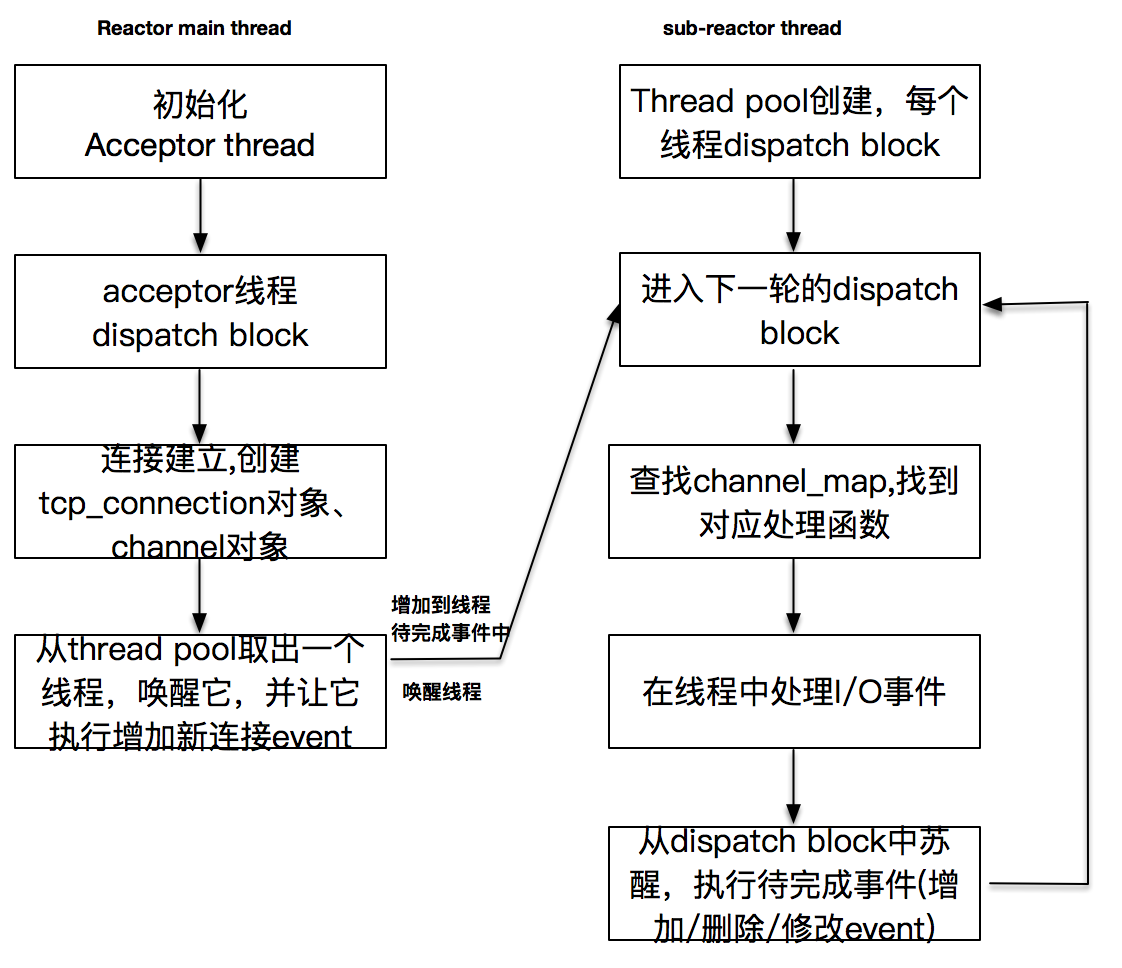
在我们的设计中,main reactor线程是一个acceptor线程,这个线程一旦创建,会以event_loop形式阻塞在event_dispatcher的dispatch方法上,实际上,它在等待监听套接字上的事件发生,也就是已完成的连接,一旦有连接完成,就会创建出连接对象tcp_connection,以及channel对象等。
当用户期望使用多个sub-reactor子线程时,主线程会创建多个子线程,每个子线程在创建之后,按照主线程指定的启动函数立即运行,并进行初始化。随之而来的问题是,主线程如何判断子线程已经完成初始化并启动,继续执行下去呢?这是一个需要解决的重点问题。
在设置了多个线程的情况下,需要将新创建的已连接套接字对应的读写事件交给一个sub-reactor线程处理。所以,这里从thread_pool中取出一个线程,通知这个线程有新的事件加入。而这个线程很可能是处于事件分发的阻塞调用之中,如何协调主线程数据写入给子线程,这是另一个需要解决的重点问题。
子线程是一个event_loop线程,它阻塞在dispatch上,一旦有事件发生,它就会查找channel_map,找到对应的处理函数并执行它。之后它就会增加、删除或修改pending事件,再次进入下一轮的dispatch。
这张图阐述了线程的运行关系。
为了方便你理解,我把对应的函数实现列在了另外一张图中。
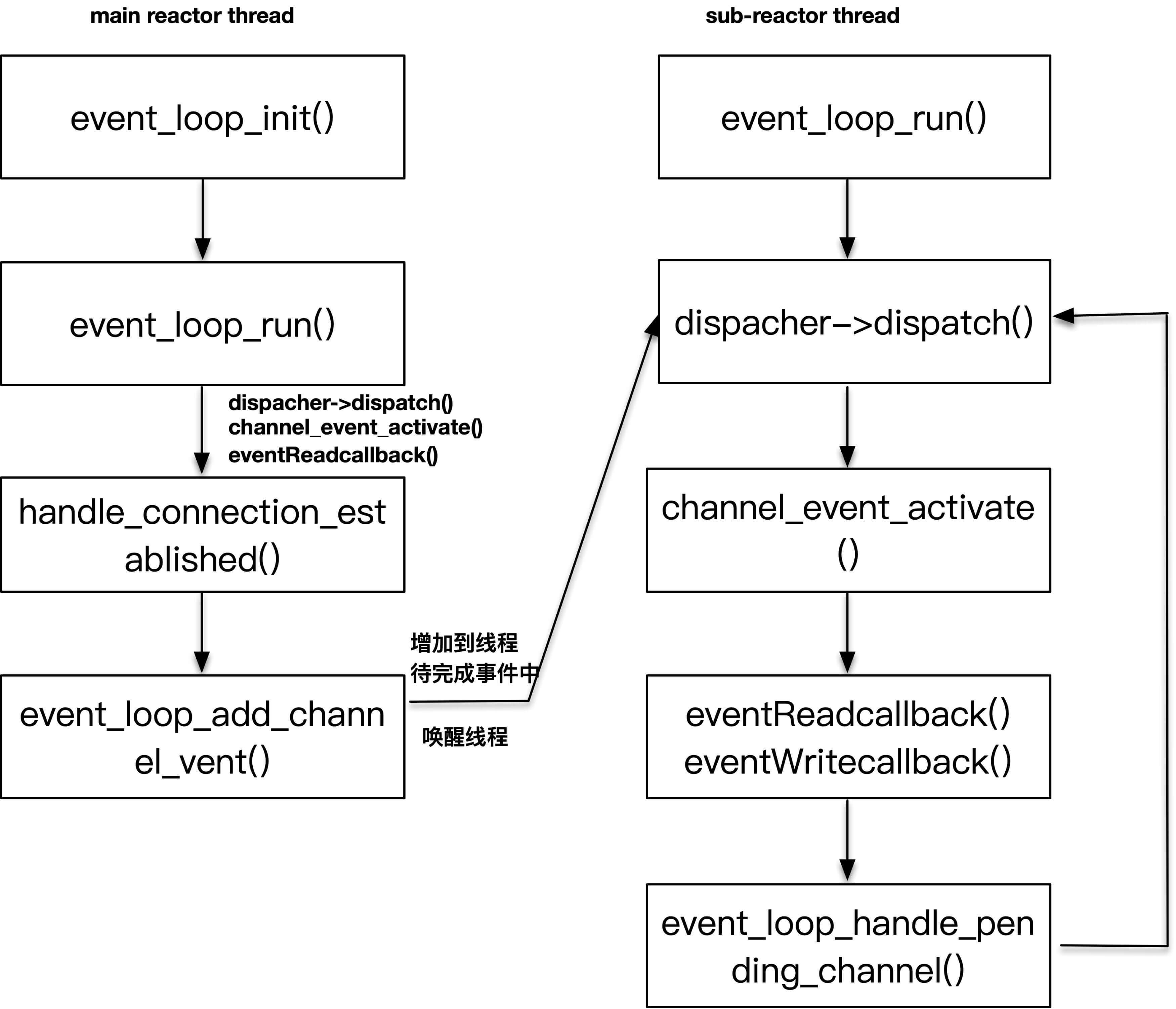
主线程等待多个sub-reactor子线程初始化完
主线程需要等待子线程完成初始化,也就是需要获取子线程对应数据的反馈,而子线程初始化也是对这部分数据进行初始化,实际上这是一个多线程的通知问题。采用的做法在前面讲多线程的时候也提到过,使用mutex和condition两个主要武器。
下面这段代码是主线程发起的子线程创建,调用event_loop_thread_init对每个子线程初始化,之后调用event_loop_thread_start来启动子线程。注意,如果应用程序指定的线程池大小为0,则直接返回,这样acceptor和I/O事件都会在同一个主线程里处理,就退化为单reactor模式。
//一定是main thread发起
void thread_pool_start(struct thread_pool *threadPool) {
    assert(!threadPool->started);
    assertInSameThread(threadPool->mainLoop);

    threadPool->started = 1;
    void *tmp;

    if (threadPool->thread_number <= 0) {
        return;
    }

    threadPool->eventLoopThreads = malloc(threadPool->thread_number * sizeof(struct event_loop_thread));
    for (int i = 0; i < threadPool->thread_number; ++i) {
        event_loop_thread_init(&threadPool->eventLoopThreads[i], i);
        event_loop_thread_start(&threadPool->eventLoopThreads[i]);
    }
}
我们再看一下event_loop_thread_start这个方法,这个方法一定是主线程运行的。这里我使用了pthread_create创建了子线程,子线程一旦创建,立即执行event_loop_thread_run,我们稍后将看到,event_loop_thread_run进行了子线程的初始化工作。这个函数最重要的部分是使用了pthread_mutex_lock和pthread_mutex_unlock进行了加锁和解锁,并使用了pthread_cond_wait来守候eventLoopThread中的eventLoop的变量。
//由主线程调用,初始化一个子线程,并且让子线程开始运行event_loop
struct event_loop *event_loop_thread_start(struct event_loop_thread *eventLoopThread) {
    pthread_create(&eventLoopThread->thread_tid, NULL, &event_loop_thread_run, eventLoopThread);

    assert(pthread_mutex_lock(&eventLoopThread->mutex) == 0);

    while (eventLoopThread->eventLoop == NULL) {
        assert(pthread_cond_wait(&eventLoopThread->cond, &eventLoopThread->mutex) == 0);
    }
    assert(pthread_mutex_unlock(&eventLoopThread->mutex) == 0);

    yolanda_msgx("event loop thread started, %s", eventLoopThread->thread_name);
    return eventLoopThread->eventLoop;
}
为什么要这么做呢?看一下子线程的代码你就会大致明白。子线程执行函数event_loop_thread_run一上来也是进行了加锁,之后初始化event_loop对象,当初始化完成之后,调用了pthread_cond_signal函数来通知此时阻塞在pthread_cond_wait上的主线程。这样,主线程就会从wait中苏醒,代码得以往下执行。子线程本身也通过调用event_loop_run进入了一个无限循环的事件分发执行体中,等待子线程reator上注册过的事件发生。
void *event_loop_thread_run(void *arg) {
    struct event_loop_thread *eventLoopThread = (struct event_loop_thread *) arg;

    pthread_mutex_lock(&eventLoopThread->mutex);

    // 初始化化event loop,之后通知主线程
    eventLoopThread->eventLoop = event_loop_init();
    yolanda_msgx("event loop thread init and signal, %s", eventLoopThread->thread_name);
    pthread_cond_signal(&eventLoopThread->cond);

    pthread_mutex_unlock(&eventLoopThread->mutex);

    //子线程event loop run
    eventLoopThread->eventLoop->thread_name = eventLoopThread->thread_name;
    event_loop_run(eventLoopThread->eventLoop);
}
可以看到,这里主线程和子线程共享的变量正是每个event_loop_thread的eventLoop对象,这个对象在初始化的时候为NULL,只有当子线程完成了初始化,才变成一个非NULL的值,这个变化是子线程完成初始化的标志,也是信号量守护的变量。通过使用锁和信号量,解决了主线程和子线程同步的问题。当子线程完成初始化之后,主线程才会继续往下执行。
struct event_loop_thread {
    struct event_loop *eventLoop;
    pthread_t thread_tid;        /* thread ID */
    pthread_mutex_t mutex;
    pthread_cond_t cond;
    char * thread_name;
    long thread_count;    /* # connections handled */
};
你可能会问,主线程是循环在等待每个子线程完成初始化,如果进入第二个循环,等待第二个子线程完成初始化,而此时第二个子线程已经初始化完成了,该怎么办?
注意我们这里一上来是加锁的,只要取得了这把锁,同时发现event_loop_thread的eventLoop对象已经变成非NULL值,可以肯定第二个线程已经初始化,就直接释放锁往下执行了。
你可能还会问,在执行pthread_cond_wait的时候,需要持有那把锁么?这里,父线程在调用pthread_cond_wait函数之后,会立即进入睡眠,并释放持有的那把互斥锁。而当父线程再从pthread_cond_wait返回时(这是子线程通过pthread_cond_signal通知达成的),该线程再次持有那把锁。
增加已连接套接字事件到sub-reactor线程中
前面提到,主线程是一个main reactor线程,这个线程负责检测监听套接字上的事件,当有事件发生时,也就是一个连接已完成建立,如果我们有多个sub-reactor子线程,我们期望的结果是,把这个已连接套接字相关的I/O事件交给sub-reactor子线程负责检测。这样的好处是,main reactor只负责连接套接字的建立,可以一直维持在一个非常高的处理效率,在多核的情况下,多个sub-reactor可以很好地利用上多核处理的优势。
不过,这里有一个令人苦恼的问题。
我们知道,sub-reactor线程是一个无限循环的event loop执行体,在没有已注册事件发生的情况下,这个线程阻塞在event_dispatcher的dispatch上。你可以简单地认为阻塞在poll调用或者epoll_wait上,这种情况下,主线程如何能把已连接套接字交给sub-reactor子线程呢?
当然有办法。
如果我们能让sub-reactor线程从event_dispatcher的dispatch上返回,再让sub-reactor线程返回之后能够把新的已连接套接字事件注册上,这件事情就算完成了。
那如何让sub-reactor线程从event_dispatcher的dispatch上返回呢?答案是构建一个类似管道一样的描述字,让event_dispatcher注册该管道描述字,当我们想让sub-reactor线程苏醒时,往管道上发送一个字符就可以了。
在event_loop_init函数里,调用了socketpair函数创建了套接字对,这个套接字对的作用就是我刚刚说过的,往这个套接字的一端写时,另外一端就可以感知到读的事件。其实,这里也可以直接使用UNIX上的pipe管道,作用是一样的。
struct event_loop *event_loop_init() {
    ...
    //add the socketfd to event 这里创建的是套接字对,目的是为了唤醒子线程
    eventLoop->owner_thread_id = pthread_self();
    if (socketpair(AF_UNIX, SOCK_STREAM, 0, eventLoop->socketPair) < 0) {
        LOG_ERR("socketpair set fialed");
    }
    eventLoop->is_handle_pending = 0;
    eventLoop->pending_head = NULL;
    eventLoop->pending_tail = NULL;
    eventLoop->thread_name = "main thread";

    struct channel *channel = channel_new(eventLoop->socketPair[1], EVENT_READ, handleWakeup, NULL, eventLoop);
    event_loop_add_channel_event(eventLoop, eventLoop->socketPair[1], channel);

    return eventLoop;
}
要特别注意的是这句代码,这告诉event_loop的,是注册了socketPair[1]描述字上的READ事件,如果有READ事件发生,就调用handleWakeup函数来完成事件处理。
struct channel *channel = channel_new(eventLoop->socketPair[1], EVENT_READ, handleWakeup, NULL, eventLoop);
我们来看看这个handleWakeup函数:
事实上,这个函数就是简单的从socketPair[1]描述字上读取了一个字符而已,除此之外,它什么也没干。它的主要作用就是让子线程从dispatch的阻塞中苏醒。
int handleWakeup(void * data) {
    struct event_loop *eventLoop = (struct event_loop *) data;
    char one;
    ssize_t n = read(eventLoop->socketPair[1], &one, sizeof one);
    if (n != sizeof one) {
        LOG_ERR("handleWakeup  failed");
    }
    yolanda_msgx("wakeup, %s", eventLoop->thread_name);
}
现在,我们再回过头看看,如果有新的连接产生,主线程是怎么操作的?在handle_connection_established中,通过accept调用获取了已连接套接字,将其设置为非阻塞套接字(切记),接下来调用thread_pool_get_loop获取一个event_loop。thread_pool_get_loop的逻辑非常简单,从thread_pool线程池中按照顺序挑选出一个线程来服务。接下来是创建了tcp_connection对象。
//处理连接已建立的回调函数
int handle_connection_established(void *data) {
    struct TCPserver *tcpServer = (struct TCPserver *) data;
    struct acceptor *acceptor = tcpServer->acceptor;
    int listenfd = acceptor->listen_fd;

    struct sockaddr_in client_addr;
    socklen_t client_len = sizeof(client_addr);
    //获取这个已建立的套集字,设置为非阻塞套集字
    int connected_fd = accept(listenfd, (struct sockaddr *) &client_addr, &client_len);
    make_nonblocking(connected_fd);

    yolanda_msgx("new connection established, socket == %d", connected_fd);

    //从线程池里选择一个eventloop来服务这个新的连接套接字
    struct event_loop *eventLoop = thread_pool_get_loop(tcpServer->threadPool);

    // 为这个新建立套接字创建一个tcp_connection对象,并把应用程序的callback函数设置给这个tcp_connection对象
    struct tcp_connection *tcpConnection = tcp_connection_new(connected_fd, eventLoop,tcpServer->connectionCompletedCallBack,tcpServer->connectionClosedCallBack,tcpServer->messageCallBack,tcpServer->writeCompletedCallBack);
    //callback内部使用
    if (tcpServer->data != NULL) {
        tcpConnection->data = tcpServer->data;
    }
    return 0;
}
在调用tcp_connection_new创建tcp_connection对象的代码里,可以看到先是创建了一个channel对象,并注册了READ事件,之后调用event_loop_add_channel_event方法往子线程中增加channel对象。
tcp_connection_new(int connected_fd, struct event_loop *eventLoop,
                   connection_completed_call_back connectionCompletedCallBack,
                   connection_closed_call_back connectionClosedCallBack,
                   message_call_back messageCallBack, write_completed_call_back writeCompletedCallBack) {
    ...
    //为新的连接对象创建可读事件
    struct channel *channel1 = channel_new(connected_fd, EVENT_READ, handle_read, handle_write, tcpConnection);
    tcpConnection->channel = channel1;

    //完成对connectionCompleted的函数回调
    if (tcpConnection->connectionCompletedCallBack != NULL) {
        tcpConnection->connectionCompletedCallBack(tcpConnection);
    }

    //把该套集字对应的channel对象注册到event_loop事件分发器上
    event_loop_add_channel_event(tcpConnection->eventLoop, connected_fd, tcpConnection->channel);
    return tcpConnection;
}
请注意,到现在为止的操作都是在主线程里执行的。下面的event_loop_do_channel_event也不例外,接下来的行为我期望你是熟悉的,那就是加解锁。
如果能够获取锁,主线程就会调用event_loop_channel_buffer_nolock往子线程的数据中增加需要处理的channel event对象。所有增加的channel对象以列表的形式维护在子线程的数据结构中。
接下来的部分是重点,如果当前增加channel event的不是当前event loop线程自己,就会调用event_loop_wakeup函数把event_loop子线程唤醒。唤醒的方法很简单,就是往刚刚的socketPair[0]上写一个字节,别忘了,event_loop已经注册了socketPair[1]的可读事件。如果当前增加channel event的是当前event loop线程自己,则直接调用event_loop_handle_pending_channel处理新增加的channel event事件列表。
int event_loop_do_channel_event(struct event_loop *eventLoop, int fd, struct channel *channel1, int type) {
    //get the lock
    pthread_mutex_lock(&eventLoop->mutex);
    assert(eventLoop->is_handle_pending == 0);
    //往该线程的channel列表里增加新的channel
    event_loop_channel_buffer_nolock(eventLoop, fd, channel1, type);
    //release the lock
    pthread_mutex_unlock(&eventLoop->mutex);
    //如果是主线程发起操作,则调用event_loop_wakeup唤醒子线程
    if (!isInSameThread(eventLoop)) {
        event_loop_wakeup(eventLoop);
    } else {
        //如果是子线程自己,则直接可以操作
        event_loop_handle_pending_channel(eventLoop);
    }

    return 0;
}
如果是event_loop被唤醒之后,接下来也会执行event_loop_handle_pending_channel函数。你可以看到在循环体内从dispatch退出之后,也调用了event_loop_handle_pending_channel函数。
int event_loop_run(struct event_loop *eventLoop) {
    assert(eventLoop != NULL);

    struct event_dispatcher *dispatcher = eventLoop->eventDispatcher;

    if (eventLoop->owner_thread_id != pthread_self()) {
        exit(1);
    }

    yolanda_msgx("event loop run, %s", eventLoop->thread_name);
    struct timeval timeval;
    timeval.tv_sec = 1;

    while (!eventLoop->quit) {
        //block here to wait I/O event, and get active channels
        dispatcher->dispatch(eventLoop, &timeval);

        //这里处理pending channel,如果是子线程被唤醒,这个部分也会立即执行到
        event_loop_handle_pending_channel(eventLoop);
    }

    yolanda_msgx("event loop end, %s", eventLoop->thread_name);
    return 0;
}
event_loop_handle_pending_channel函数的作用是遍历当前event loop里pending的channel event列表,将它们和event_dispatcher关联起来,从而修改感兴趣的事件集合。
这里有一个点值得注意,因为event loop线程得到活动事件之后,会回调事件处理函数,这样像onMessage等应用程序代码也会在event loop线程执行,如果这里的业务逻辑过于复杂,就会导致event_loop_handle_pending_channel执行的时间偏后,从而影响I/O的检测。所以,将I/O线程和业务逻辑线程隔离,让I/O线程只负责处理I/O交互,让业务线程处理业务,是一个比较常见的做法。
总结
在这一讲里,我们重点讲解了框架中涉及多线程的两个重要问题,第一是主线程如何等待多个子线程完成初始化,第二是如何通知处于事件分发中的子线程有新的事件加入、删除、修改。第一个问题通过使用锁和信号量加以解决;第二个问题通过使用socketpair,并将sockerpair作为channel注册到event loop中来解决。
思考题
和往常一样,给你布置两道思考题:
第一道, 你可以修改一下代码,让sub-reactor默认的线程个数为cpu*2。
第二道,当前选择线程的算法是round-robin的算法,你觉得有没有改进的空间?如果改进的话,你可能会怎么做?
欢迎在评论区写下你的思考,也欢迎把这篇文章分享给你的朋友或者同事,一起交流进步一下。
精选留言
2019-12-11 23:17:53
为什么event_loop_channel_buffer_nolock(eventLoop, fd, channel1, type);是往子线程的数据中增加需要处理的 channel event 对象呢?
void event_loop_channel_buffer_nolock(struct event_loop *eventLoop, int fd, struct channel *channel1, int type) {
//add channel into the pending list
struct channel_element *channelElement = malloc(sizeof(struct channel_element));
channelElement->channel = channel1;
channelElement->type = type;//1 add (1: add 2: delete)
channelElement->next = NULL;
//第一个元素 channel_element是channel的链表,
// eventLoop pending_head和pending_tail维护的是channelElement的链表
//这样的话最终还是event_loop包含了channel(event_loop->channelElement->channel)
if (eventLoop->pending_head == NULL) {
eventLoop->pending_head = eventLoop->pending_tail = channelElement;
} else {
eventLoop->pending_tail->next = channelElement;
eventLoop->pending_tail = channelElement;
}
}
void *event_loop_thread_run(void *arg) {
struct event_loop_thread *eventLoopThread = (struct event_loop_thread *) arg;
pthread_mutex_lock(&eventLoopThread->mutex);
// 初始化化event loop,之后通知主线程
eventLoopThread->eventLoop = event_loop_init_with_name(eventLoopThread->thread_name);
yolanda_msgx("event loop thread init and signal, %s", eventLoopThread->thread_name);
pthread_cond_signal(&eventLoopThread->cond);
pthread_mutex_unlock(&eventLoopThread->mutex);
//子线程event loop run
event_loop_run(eventLoopThread->eventLoop);
}
struct event_loop_thread {
struct event_loop *eventLoop;//主线程和子线程共享
pthread_t thread_tid; /* thread ID */
pthread_mutex_t mutex;
pthread_cond_t cond;
char * thread_name;
long thread_count; /* # connections handled */
};
event_loop_channel_buffer_nolock这个函数中是往eventLoop的链表中注册事件,可是这里的eventLoop是和子线程处理函数
event_loop_thread_run中eventLoopThread->eventLoop不是一个eventLoop啊,这个eventLoopThread->eventLoop不才是主子线程共享的吗?
2020-09-23 23:49:19
2020-12-11 17:40:33
2020-07-15 11:46:45
2022-09-01 23:00:18
2022-01-07 23:53:30
2020-08-24 13:14:04
2019-10-23 09:43:31
2019-10-23 09:37:43
2023-07-17 00:01:29
2023-07-10 16:02:46
这里如果把cond_wait改成一个while(event_loop == null)会好理解点,这里的even_loop是判断子线程是否就绪的依据。
但是我们知道while循环会造成非常大的cpu开销。最理想的情况是,event_loop为null的时候,我们等在这里,当event_loop不为空的时候通知一下我,这期间不消耗任何cpu资源。这个理想情况就是cond条件变量。
我们看第一种情况,假如父线程先获取到锁,由于event_loop还没有初始化好,所以进入到cond_wait,同时会释放锁进入到睡眠状态。此时子线程获取到锁,初始化完之后调用cond_signal。此时父线程从cond_wait唤醒,并在此持有锁,进入到下一次循环,此时event_loop一定是不等于null的,所以跳出循环,释放锁继续执行后面的代码。
第二种情况,子线程先拿到锁,此时父线程阻塞在mutex_lock,当子线程释放锁之后event_loop已经初始化好,然后父进程拿到锁,进入while(event
_loo)循环,event_loop不等于null,跳出循环,释放锁。
所以老师说cond_wait有必要持有锁吗?答案是要的。
理解这部分内容需要有一些前置知识,比如如果不知道cond的运行机制就很难理解cond_wait这行的意义,这又是整个实现的关键。
2022-09-07 22:59:12
2022-02-28 17:20:10
1、就单reactor而言,主线程创建管道fd,正常来说应该是在epoll_wait上注册0端读事件,往管道1端写数据的方式来唤醒epoll。
2、而主从reactor代码来看,主线程和子线程都创建了一对pairfd,主线程的管道1端注册在主线程的epoll上,这样即使往管道中写数据,也只是唤醒主线程,怎么会唤醒子线程呢??,代码中好像没有将主线程的管道fd一端注册在子线程的epoll上。是不是下面的这行代码导致的
eventLoop->eventDispatcher = &poll_dispatcher;
主线程和子线程共用一个同一个poll_dispatcher对象,还是没有看出在哪个地方传递的fd??
2022-02-20 14:35:14
1. 为什么主线程要等待子线程初始化完成?是担心 tcp_server_init 后、但子线程还未初始化完成时,thread_pool_get_loop 无法找到子线程来处理新来的连接吗?
2. 文中提到”你可能会问,主线程是循环在等待每个子线程完成初始化,如果进入第二个循环,等待第二个子线程完成初始化,而此时第二个子线程已经初始化完成了,该怎么办?“
主线程不是等第一个子线程初始化完成后才会进入下一个循环启动第二个子线程吗?怎么会出现”而此时第二个子线程已经初始化完成了“?
2022-01-10 22:39:29
2022-01-05 16:43:10
2021-11-12 11:11:09
2020-12-04 07:49:59
2020-09-06 17:34:16
2020-06-02 20:08:03