你好,我是朱涛。初二过年好!
在上节课里,我给你留了一个作业,那就是:用Kotlin来完成 LeetCode的640号题《求解方程》。那么这节课,我就来讲讲我的解题思路,我们互相学习。
这道题也非常容易理解,程序的输入是一个“一元一次方程”,我们需要根据输入的方程,计算出正确的结果。根据输入方程的不同,结果可能有三种情况:
- 方程仅有一个解,这时,我们只需要按照格式返回结果即可,比如输入“2x=4”,那么输出就应该是“x=2”。
- 方程有无数个解,比如输入“x=x”,那么输出就应该是“Infinite solutions”。
- 方程无解,比如输入“x=x+5”,那么输出结果就应该是“No solution”。
另外,对于程序的输入格式,其实我们还有几个问题需要弄清楚。只有弄清楚了这些问题,我们才能开始写代码:
- 方程当中的未知数只会用x表示,不会是y,也不会是大写的“X”。
- 方程当中不会出现空格,比如“2x=4”,不会出现“2x = 4 ”的情况。
- 方程当中只会有加减法,不会出现乘除法。
- 方程当中的数字,一定是整数,不会出现分数、小数。
- 输入的方程一定是一个正确的方程,不会出现“x=…”之类的脏数据。
好,问题的细节都弄清楚了,下面我们来分析一下解题的思路。
对于这种简单的一元一次方程的解法,其实我们在小学就学过了,概括起来,就是分为三个步骤。
- 第一步,移项。将含有x的式子全部移到等式的左边,将数字全部都移到等式的右边。另外,移项的时候符号要变。比如“3x-4=x+2”这个方程,移项以后,就会变成这样:“3x-x=2+4”。
- 第二步,合并同类项。这里其实就是将等式的左边与右边合并起来,对于“3x-x=2+4”这个式子,合并完以后,就会变成“2x=6”。
- 第三步,系数化为一。这时候,我们就需要拿右边的数字,除以左边的系数。比如上面的式子“2x=6”,系数化为一之后,就会变成“x=3”,这就是我们想要的方程解。当然,这只是方程只有一个解的情况,其实在系数化为一之前,还存在其他的情况,比如“x=x+5”最终会变成“0=5”,这时候左边是零,右边不是零,这时候就代表方程无解;对于“2x=2x”这样的方程,它最终会变成“0=0”,这种两边都等于零的情况,就代表了方程有无数个解。
好,如何求解方程的思路我们已经知道了,那么代码该如何写呢?这里,我们仍然有两种解法,这两种解法的思路是一致的,只是其中一种是偏命令式的,另一种是偏函数式的。
这里,我照样是制作了一张动图,给你展示下程序运行的整体思路:
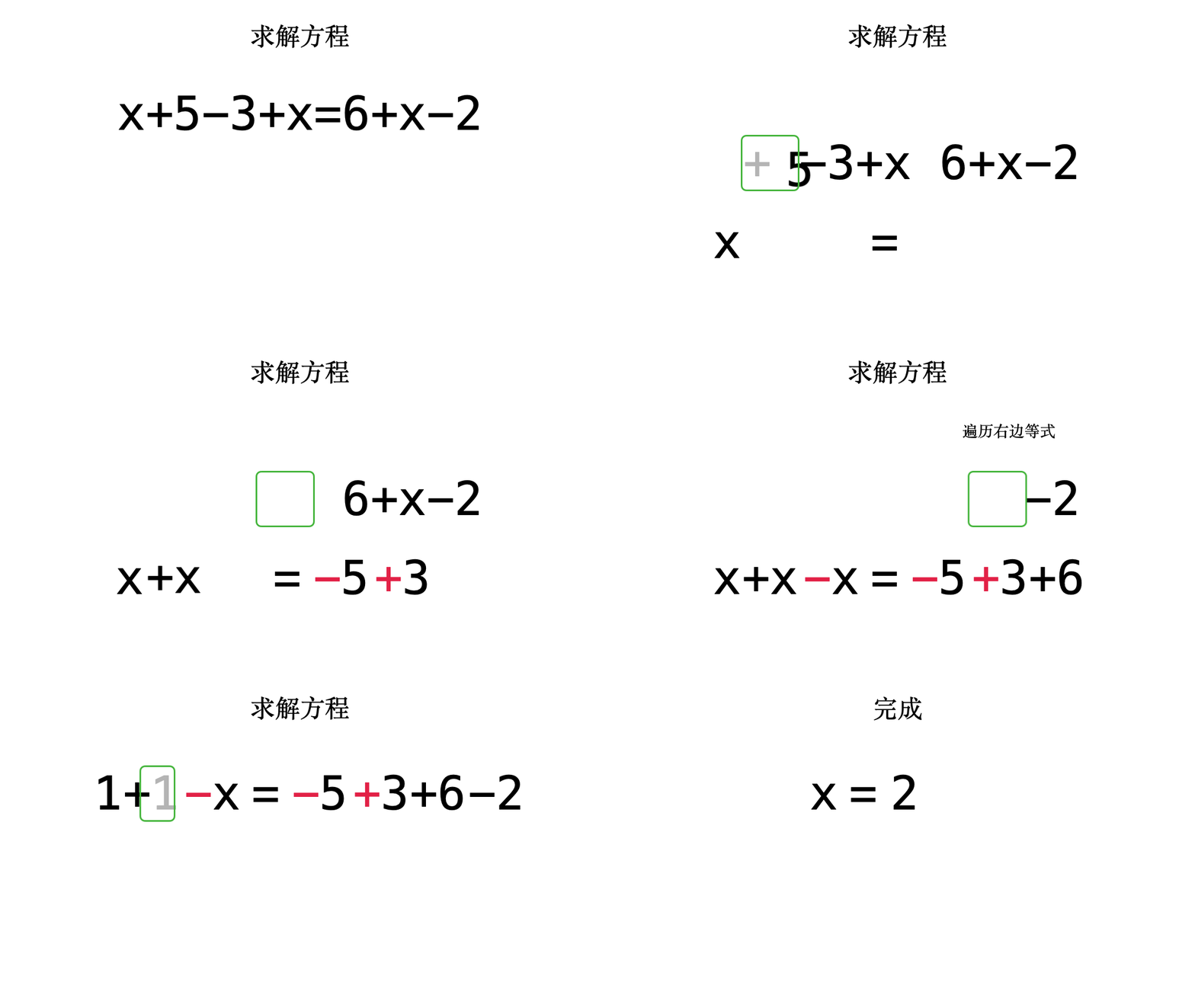
解法一:命令式
首先,我们按照前面分析的思路,把待实现的程序分为以下几个步骤:
fun solveEquation(equation: String): String {
    // ① 分割等号
    // ② 遍历左边的等式,移项,合并同类项
    // ③ 遍历右边的等式,移项,合并同类项
    // ④ 系数化为一,返回结果
}
根据注释,我们很容易就能完成其中①、④两个步骤的代码:
fun solveEquation(equation: String): String {
        // ① 分割等号
        val list = equation.split("=")

        // ② 遍历左边的等式,移项,合并同类项
        // ③ 遍历右边的等式,移项,合并同类项

        // ④ 系数化为一,返回结果
        return when {
            leftSum == 0 && rightSum == 0 -> "Infinite solutions"
            leftSum == 0 && rightSum != 0 -> "No solution"
            else -> "x=${rightSum / leftSum}"
        }
    }
现在,关键还是在于②、③两个步骤的代码。这里,list[0]其实就代表了左边的式子,list[1]就代表了右边的式子。
按照之前的思路分析,我们其实用两个for循环,分别遍历它们,然后顺便完成移项与合并同类项就行了。具体的代码如下:
var leftSum = 0
var rightSum = 0

val leftList = splitByOperator(list[0])
val rightList = splitByOperator(list[1])

// ② 遍历左边的等式,移项,合并同类项
leftList.forEach {
    if (it.contains("x")) {
        leftSum += xToInt(it)
    } else {
        rightSum -= it.toInt()
    }
}

// ③ 遍历右边的等式,移项,合并同类项
rightList.forEach{
    if (it.contains("x")) {
        leftSum -= xToInt(it)
    } else {
        rightSum += it.toInt()
    }
}
这段代码的逻辑其实也比较清晰了,leftList、rightList是根据“+”、“-”分割出来的元素。在完成分割以后,我们再对它们进行了遍历,从而完成了移项与合并同类项。
并且,这里我们还用到了另外两个方法,分别是splitByOperator()、xToInt(),它们具体的代码如下:
private fun splitByOperator(list: String): List<String> {
    val result = mutableListOf<String>()
    var temp = ""
    list.forEach {
        if (it == '+' || it == '-') {
            if (temp.isNotEmpty()) {
                result.add(temp)
            }
            temp = it.toString()
        } else {
            temp += it
        }
    }

    result.add(temp)
    return result
}

private fun xToInt(x: String) =
    when (x) {
        "x",
        "+x" -> 1
        "-x" -> -1
        else -> x.replace("x", "").toInt()
    }
从以上代码中,我们可以看到splitByOperator()就是使用“+”、“-”作为分隔符,将字符串类型的式子,分割成一个个的元素。而xToInt()的作用则是为了提取x的系数,比如“2x”,提取系数以后,就是“2”;而“-2x”的系数就是“-2”。
最后,我们再来看看整体的代码:
fun solveEquation(equation: String): String {
    // ① 分割等号
    val list = equation.split("=")

    var leftSum = 0
    var rightSum = 0

    val leftList = splitByOperator(list[0])
    val rightList = splitByOperator(list[1])

    // ② 遍历左边的等式,移项,合并同类项
    leftList.forEach {
        if (it.contains("x")) {
            leftSum += xToInt(it)
        } else {
            rightSum -= it.toInt()
        }
    }

    // ③ 遍历右边的等式,移项,合并同类项
    rightList.forEach{
        if (it.contains("x")) {
            leftSum -= xToInt(it)
        } else {
            rightSum += it.toInt()
        }
    }

    // ④ 系数化为一,返回结果
    return when {
        leftSum == 0 && rightSum == 0 -> "Infinite solutions"
        leftSum == 0 && rightSum != 0 -> "No solution"
        else -> "x=${rightSum / leftSum}"
    }
}

// 根据“+”、“-”分割式子
private fun splitByOperator(list: String): List<String> {
    val result = mutableListOf<String>()
    var temp = ""
    list.forEach {
        if (it == '+' || it == '-') {
            if (temp.isNotEmpty()) {
                result.add(temp)
            }
            temp = it.toString()
        } else {
            temp += it
        }
    }

    result.add(temp)
    return result
}

// 提取x的系数:“-2x” ->“-2”
private fun xToInt(x: String) =
    when (x) {
        "x",
        "+x" -> 1
        "-x" -> -1
        else -> x.replace("x", "").toInt()
    }
至此,偏命令式的代码就完成了,接下来我们看看偏函数式的代码该怎么写。
解法二:函数式
这里你要注意了,函数式的思路呢,和命令式的思路其实是一样的。解方程的步骤是不会变的,仍然是移项、合并同类项、系数化为一。只不过,对比前面的实现方式,我们这里会更多地借助Kotlin的标准库函数。
首先,我们来看看第一部分的代码怎么写:
fun solveEquation(equation: String): String {
    val list = equation
        .replace("-", "+-") // 预处理逻辑
        .split("=")

    // 用“+”分割字符串
    val leftList = list[0].split("+")
    val rightList = list[1].split("+")

    // 省略
}
这里,为了可以直接使用Kotlin的库函数split来实现算式的分割,我使用了一种数据预处理的办法。你可以看到,在上面代码的注释处,replace("-", "+-") 的作用是将算式当中的所有“-”替换成“+-”,这就是预处理。经过这个预处理后,我们就可以直接使用 split("+") 来分割算式了。
为了体现这个细节,我这里也做了一个动图,你可以看看:
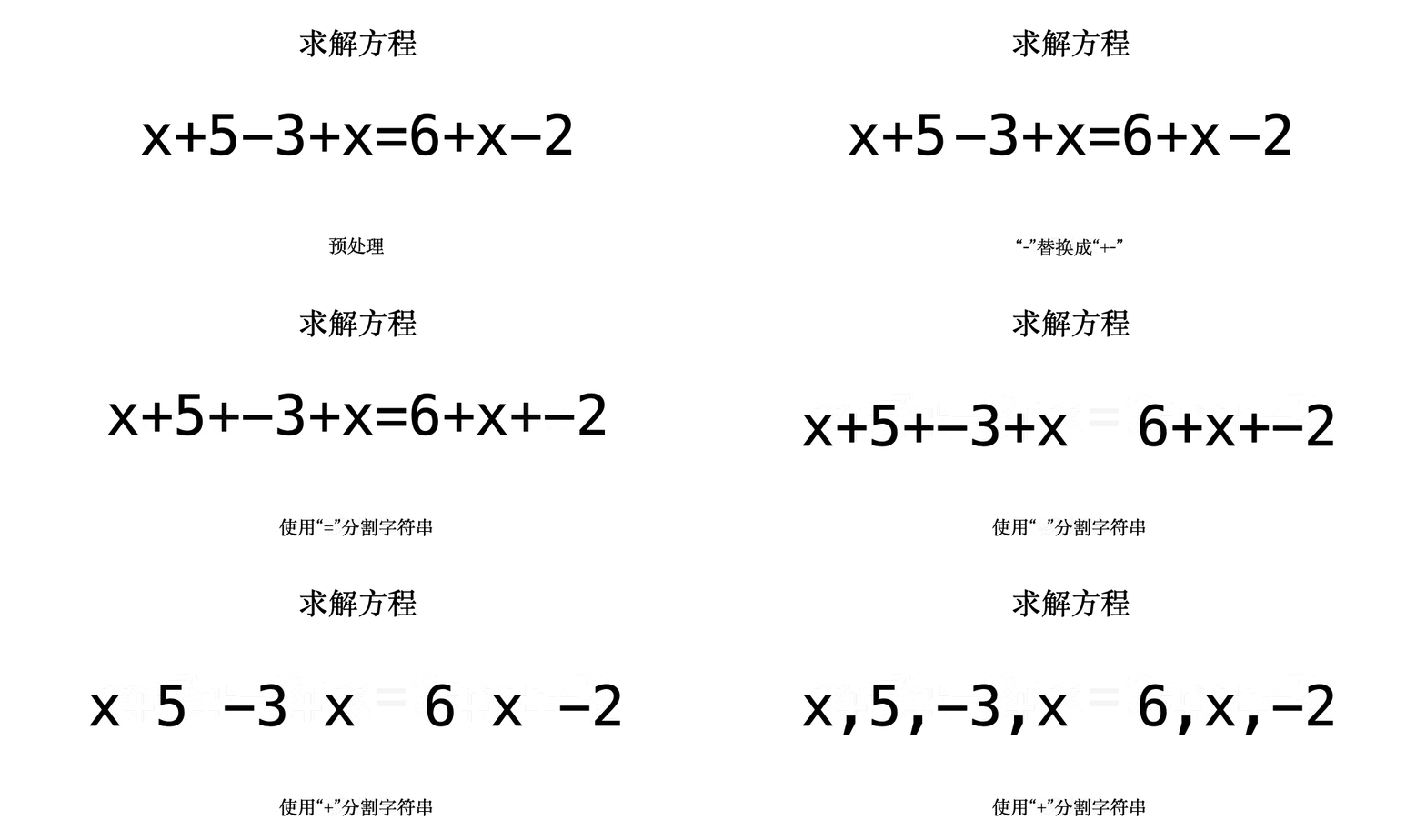
这样一来,我们得到的leftList、rightList其实就是干净的、独立的数字和x式子了。以“x+5-3+x=6+x-2”为例,leftList=["x","5","-3","x"],而rightList=["6","x","-2"]。
既然它们两者都是普通的集合,那么我们接下来,就完全可以借助Kotlin强大的库函数来做剩下的事情了。我们只需要将所有x的式子挪到左边,所有数字挪到右边,然后合并,最后系数化为一即可。大致代码如下:
leftList
    .filter { it.hasX() }
    .map { xToInt(it) } // ①
    .toMutableList()
    .apply {
        rightList
            .filter { it.hasX() }
            .map { xToInt(it).times(-1) } // ②
            .let { addAll(it) }
    }.sum() // ③
    .let { leftSum = it }

rightList
    .filter { it.isNumber() }
    .map { it.toInt() } // ④
    .toMutableList()
    .apply {
        leftList
            .filter { it.isNumber() }
            .map { it.toInt().times(-1) } // ⑤
            .let { addAll(it) }
    }.sum() // ⑥
    .let { rightSum = it }

// 返回结果
return when {
    leftSum == 0 && rightSum == 0 -> "Infinite solutions"
    leftSum == 0 && rightSum != 0 -> "No solution"
    else -> "x=${rightSum / leftSum}" // ⑦
}
上面这段代码中,一共有6个注释,我们一个个看:
- 注释①,我们提取出了左边式子里所有x的系数,这里不需要移项,因为它本来就在左边。
- 注释②,我们提取了右边式子里所有x的系数,由于这里涉及到移项,因此需要变号,这里我们通过乘以一个“-1”来实现的。
- 注释③,我们将所有x的系数合并到了一起,得到了左边x的系数之和。
- 注释④,我们收集了右边式子里所有的数字,这里也不需要移项,因为它本来就在右边。
- 注释⑤,我们收集了左边式子里所有的数字,这里要移项,所以要变号。
- 注释⑥,我们将所有数字求和了。
- 注释⑦,如果方程有解的话,我们通过“rightSum / leftSum”就可以计算出来了。
另外,以上代码其实还涉及到三个辅助的函数,需要我们自己实现,它们的逻辑都很简单:
private fun String.isNumber(): Boolean =
    this != "" && !this.contains("x")

private fun String.hasX(): Boolean =
    this != "" && this.contains("x")

// 提取x的系数:“-2x” ->“-2”
private fun xToInt(x: String) =
    when (x) {
        "x" -> 1
        "-x" -> -1
        else -> x.replace("x", "").toInt()
    }
xToInt()这个函数和之前的逻辑是相似的,isNumber()和hasX()这两个扩展函数,它们是用来判断式子是纯数字、还是含有x的,这是因为我们要把x放到等式左边,而数字要放到等式右边。
最后,我们再来看看整体的代码:
fun solveEquation(equation: String): String {
    val leftSum: Int
    val rightSum: Int

    val list = equation
        .replace("-", "+-") // 预处理数据
        .split("=")

    val leftList = list[0].split("+")
    val rightList = list[1].split("+")

    // 求出所有x的系数之和
    leftList
        .filter { it.hasX() }
        .map { xToInt(it) }
        .toMutableList()
        .apply {
            rightList
                .filter { it.hasX() }
                .map { xToInt(it).times(-1) }
                .let { addAll(it) }
        }.sum()
        .let { leftSum = it }

    // 求出所有数字之和
    rightList
        .filter { it.isNumber() }
        .map { it.toInt() }
        .toMutableList()
        .apply {
            leftList
                .filter { it.isNumber() }
                .map { it.toInt().times(-1) }
                .let { addAll(it) }
        }.sum()
        .let { rightSum = it }

    // 返回结果
    return when {
        leftSum == 0 && rightSum == 0 -> "Infinite solutions"
        leftSum == 0 && rightSum != 0 -> "No solution"
        else -> "x=${rightSum / leftSum}"
    }
}

private fun String.isNumber(): Boolean =
    this != "" && !this.contains("x")

private fun String.hasX(): Boolean =
    this != "" && this.contains("x")

// 提取x的系数:“-2x” ->“-2”
private fun xToInt(x: String) =
    when (x) {
        "x" -> 1
        "-x" -> -1
        else -> x.replace("x", "").toInt()
    }
小结
这节课,我们用两种方式实现了LeetCode的640号题《求解方程》。这两种解法的核心思路其实是一致的,不过前者是偏命令式的,后者是偏函数式的。而你要清楚,即使它们是用的一种思路,也仍然是各有优劣的。
- 解法一,命令式的代码,它的时间复杂度和空间复杂度要稍微好一些,但总体差距不大,所以不一定能体现出运行时的差异。这种方式的劣势在于,逻辑相对复杂,可读性稍差,且编码过程中容易出错。
- 解法二,偏函数式的代码,它的优势在于,代码逻辑相对清晰,并且,由于运用了大量Kotlin库函数,没那么容易出错。
小作业
好,最后,我还是给你留一个小作业,请你用Kotlin来完成 LeetCode的592号题《分数加减运算》,下节课我也会给出我的答案。
精选留言
2022-02-02 23:57:57
```kotlin
// 根据“+”、“-”分割式子
private fun splitByOperator(list: String) =
list.split(Regex("(?=[+-])")).filter { it.isNotEmpty() }
```
或者
```kotlin
// 根据“+”、“-”分割式子
private fun splitByOperator(list: String): Sequence<String> =
Regex("""[+-]?(\d*x|\d+)""").findAll(list).map { it.value }
```
2022-02-02 11:41:09
fun fractionAddition(expression: String): String {
// Split the expression to several pairs of numerator and denominator
val numbers = expression
.replace("-", "+-")
.split("+")
.filter { it.isNotEmpty() }
.map { it.split("/").take(2).map(String::toInt) }
// Calculate the lcm of all denominators
val rawDenominator = numbers.map { it[1] }.fold(1) { x, y -> lcm(x, y) }
// Calculate the sum of all numerators
val rawNumerator = numbers.sumOf { it[0] * rawDenominator / it[1] }
// Reformat numerator and denominator through their gcd
val gcd = abs(gcd(rawNumerator, rawDenominator))
val denominator = rawDenominator / gcd
val numerator = rawNumerator / gcd
return "$numerator/$denominator"
}
fun gcd(x: Int, y: Int): Int = if (y == 0) x else gcd(y, x % y)
fun lcm(x: Int, y: Int): Int = x * y / gcd(x, y)
```
2025-01-22 07:02:20
class Solution {
fun solveEquation(equation: String): String {
val (left, right) = equation.replace("-", "+-")
.split("=")
.map { it.split("+") }
.map { list -> list.filter { it.isNotBlank() } }
fun sumX(str: List<String>): Int = str.filter { it.contains("x") }
.sumOf {
when (it) {
"x" -> 1
"-x" -> -1
else -> it.substringBefore("x").toInt()
}
}
fun sumNum(str: List<String>): Int = str.filter { !it.contains("x") }
.sumOf { it.toInt() }
val x = sumX(left) - sumX(right)
val num = sumNum(right) - sumNum(left)
return when {
x == 0 && num == 0 -> "Infinite solutions"
x == 0 || num % x != 0 -> "No solution"
else -> "x=${num / x}"
}
}
}
```
2022-11-05 11:28:31
fun solveEquation(equation: String): String =
equation.split("=")
.map(this::statistics)
.calculate()
private fun statistics(expr: String): Pair<Int, Int> =
expr.replace("-", "+-")
.split("+")
.fold(Pair(0, 0)) { ans, s ->
if (s.contains("x")) {
ans.copy(first = ans.first + s.substring(0, s.length-1).toValue())
} else {
ans.copy(second = ans.second + if (s.isEmpty()) { 0 } else {s.toValue()})
}
}
private fun String.toValue(): Int =
when(this) {
"" -> 1
"-" -> -1
else -> this.toInt()
}
private fun List<Pair<Int,Int>>.calculate(): String {
val left = this[0]
val right = this[1]
return if (left.first == right.first) {
if (left.second == right.second) "Infinite solutions"
else "No solution"
} else {
val x = left.first - right.first
val v = right.second - left.second
"x=${v / x}"
}
}
}
2022-03-02 23:49:10
var xCount = 0 // 移到左边的 x 系数之和
var addValue = 0 // 移到右边的数字之和
val equalIndex = equation.indexOf('=') // 等号的位置
var i = 0
while (i < equation.length) {
val fromIndex = i
if (i == 0) {
i++
}
for (j in i until equation.length) {
val c: Char = equation[j]
if (c == '+' || c == '-' || c == '=') {
break
}
i++
}
var subString = equation.substring(if (fromIndex == 0) fromIndex else fromIndex - 1, i)
subString = if (subString.startsWith("=")) subString.substring(1) else subString
println("值为:$subString")
if (subString.endsWith("x")) {
subString = subString.substring(0, subString.length - 1)
val tempCount = if (subString.isEmpty()) 1 // x
else {
if (subString.length == 1 && (subString.startsWith("+") || subString.startsWith("-"))) { // +x 或 -x
if (subString[0] == '+') 1 else -1
} else subString.toInt() // +5x 或 5x 或 53x 或 -2x
}
xCount = if (i > equalIndex) xCount - tempCount else xCount + tempCount // 左正右负
} else if (subString.isNotEmpty()) { // 过滤掉 = 产生的一个空字符串
val tempValue = subString.toInt()
addValue = if (i > equalIndex) addValue + tempValue else addValue - tempValue // 左负右正
}
i++
}
println("结果:${xCount}x = $addValue")
return if (xCount == 0) if (addValue == 0) "Infinite solutions" else "No solution"
else "x=" + addValue / xCount
}
2022-02-20 00:03:40
// 分数的数据结构 symbol为-1 1
// 注意分子/分母为正整数
data class Fraction(val numerator: Int, val denominator: Int, val symbol: Int)
fun fractionAddition(expression: String): String {
return expression.replace("-", "+-") // "-"前增加+,方便split处理
.split("+") // 按"+"分隔
.filter { it.isNotBlank() } // 去掉可能为空的部分
.map { // 处理成分数实例
var symbol = if (it.startsWith("-")) -1 else 1
val ss = it.replace("-", "").split("/")
Fraction(ss[0].toInt(), ss[1].toInt(), symbol)
}.run {
// 算出分母的最小公倍数,作为分母
val denominator = map { it.denominator }.reduce { a, b -> lcm(a, b) }
// 按最小公倍数计算分子结果
var numerator = map { it.symbol * it.numerator * denominator / it.denominator }.reduce { a, b -> a + b }
val symbol = if (numerator < 0) -1 else 1
numerator *= symbol // 转正
val gcd = gcd(numerator, denominator) // 结果可能可约分
Fraction(numerator / gcd, denominator / gcd, symbol)
}.run { "${if (symbol < 0) "-" else ""}${numerator}/${denominator}" }
}
// 最小公倍数
private fun lcm(m: Int, n: Int): Int {
return m * n / gcd(m, n)
}
// 最大公约数
private fun gcd(m: Int, n: Int): Int {
return if (m % n == 0) n else gcd(n, m % n)
}